
“Storage Almost Full” never tells you what to delete.
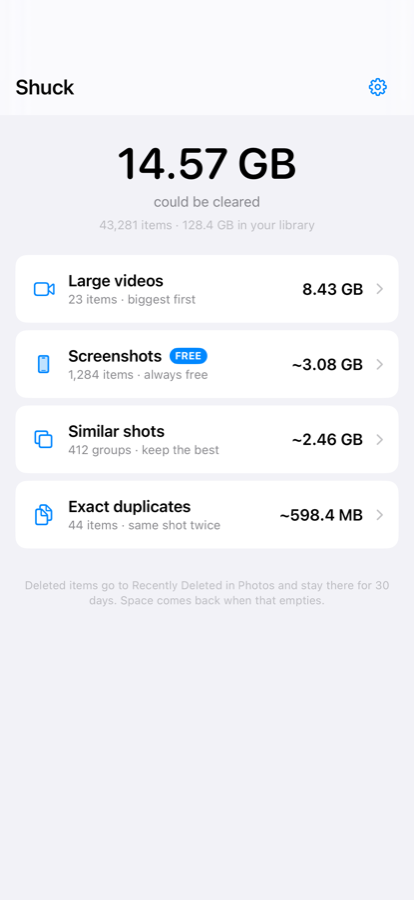
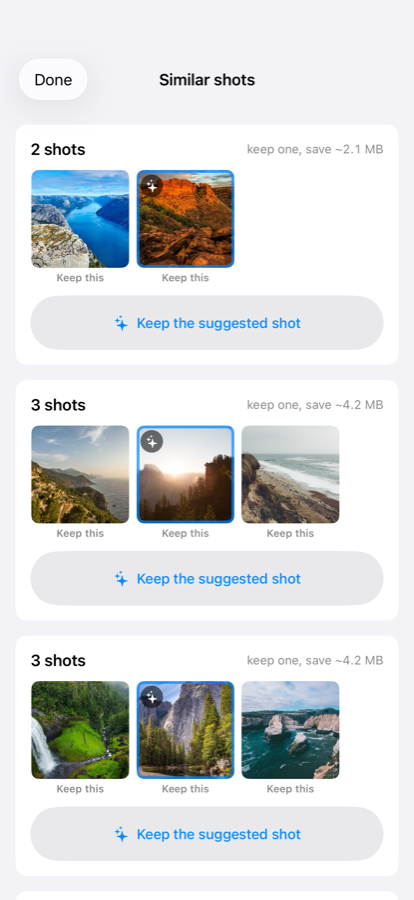
Shuck breaks your photo library into the four things actually taking up the space — screenshots, large videos, duplicates and near-identical shots — and puts a size on each one. Then you decide.
Sizes, not counts
“1,240 screenshots” is not a decision. “3.1 GB of screenshots” is. Every category leads with what it is costing you.
Nothing is pre-selected
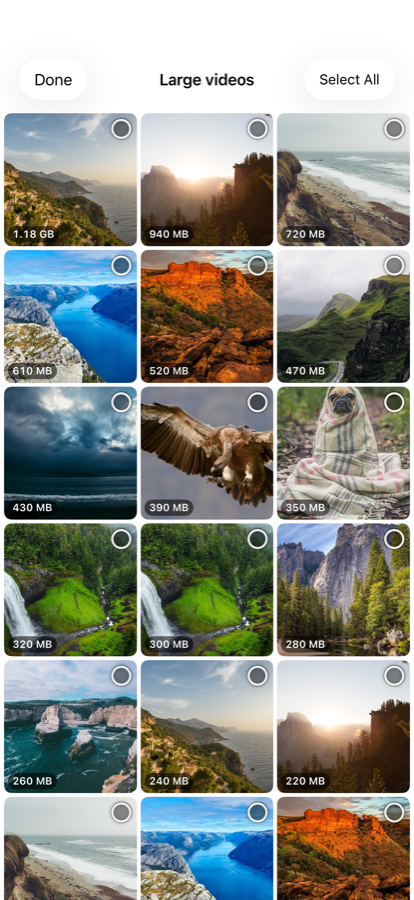
No pre-ticked boxes and no “clean everything” button. The count at the bottom only ever reflects photos you deliberately tapped.
Screenshots are free. Forever.
Not a trial and not a limited number. The whole screenshots category is free with no cap, because that is where most of the easy space is.
It never leaves your phone
Every comparison runs on-device using Apple's own frameworks. There is no server, no account, and no network code in the app.
Honest about duplicates
Byte-for-byte duplicates are labelled as duplicates. Photos that merely look alike are kept separate, as a judgement call for you to make.
Measured, not promised
After a delete, Shuck reports the space your phone actually recovered next to what it estimated. Estimates always carry a ~.
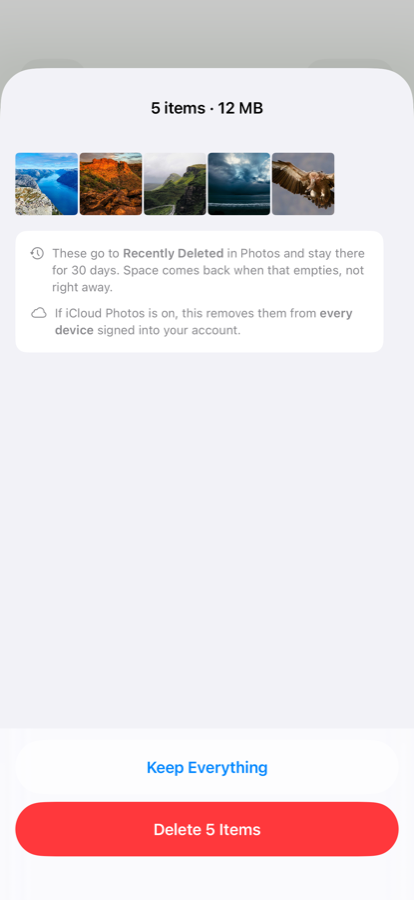
Where deleted photos go. Shuck asks iOS to delete, so iOS shows its own confirmation and the items land in Recently Deleted in Photos for 30 days. Shuck cannot skip either step, and would not want to.
One price, stated plainly. No weekly subscription dressed up as a free trial. The yearly plan costs less than four weeks of what the usual photo cleaner charges, and there is a one-time option for anyone who would rather never think about it again.
If your photos live in iCloud. Deleting a photo here deletes it from iCloud Photos everywhere, and how much space you get back on this phone depends on how much of the library was downloaded to it. Shuck says so before it does anything.